
Renting in Downtown Atlanta
Location & Commute Guide
Downtown Atlanta is the city’s functional core — dense, active, and constantly in motion. This is where government, transit, education, tourism, and major employers intersect, creating a day-to-day environment that feels busy regardless of time or season.
For out-of-state relocators, Downtown often looks “central” on a map, but living here is less about convenience by default and more about choosing the right block, building, and expectations. It’s loud, walkable, and highly connected, with daily life shaped by institutions, foot traffic, and infrastructure rather than curated neighborhood charm.
Downtown works best for renters who value proximity, access, and urban intensity — and who want clarity before committing.
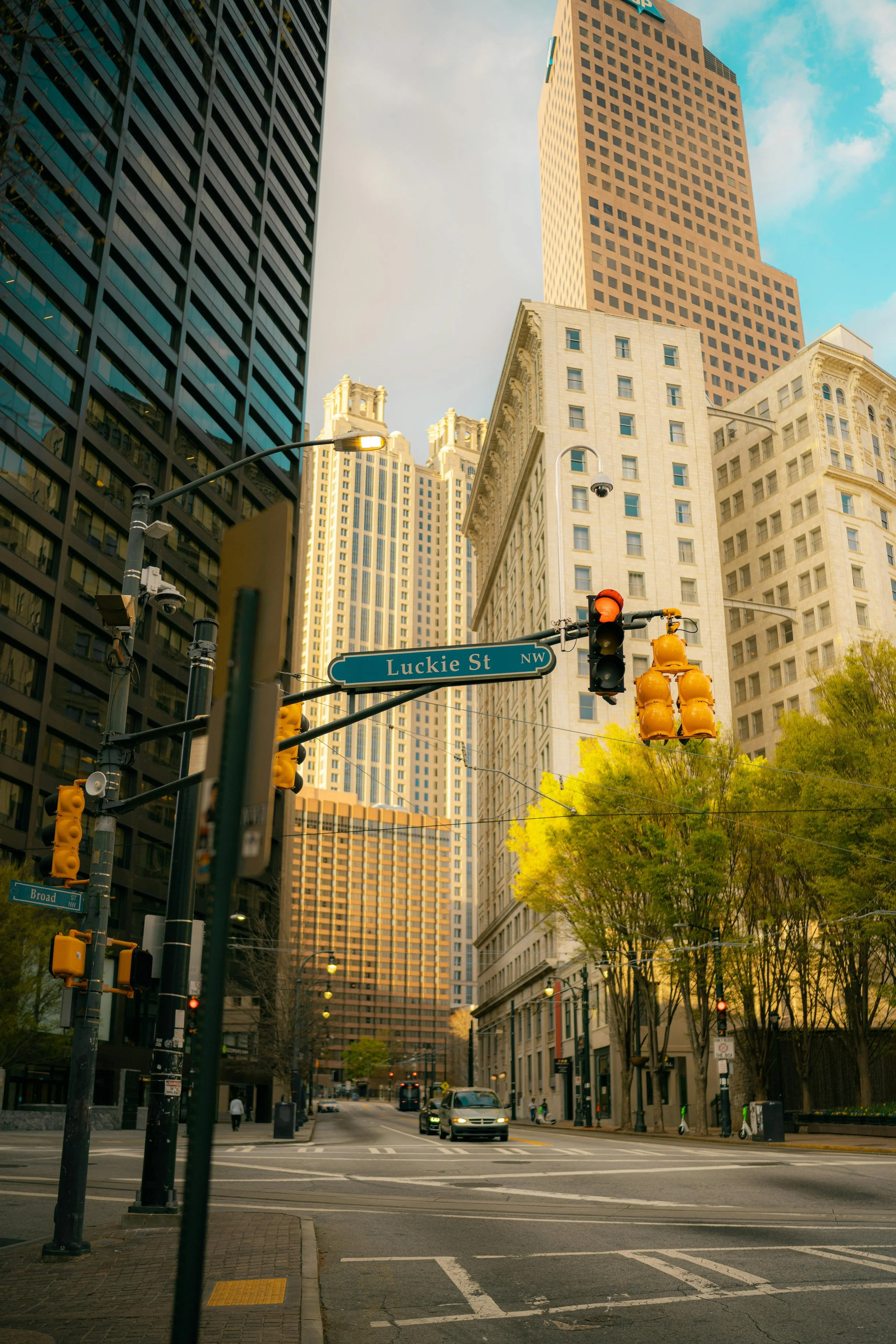
Downtown at a Glance
📍 Location: Inside I-285 (ITP), Atlanta’s central core
🚗 Commute: Central access to Midtown, Buckhead, medical centers, universities, and government offices
🚇 Transit: Multiple MARTA rail stations concentrated throughout Downtown
🚶 Walkability: Dense, walkable street grid across the district
🏙️ Housing: High-rise and mid-rise apartments, mixed-use residential towers
Best for:
Professionals working in or near the urban core
Out-of-state relocators prioritizing proximity and access
Renters comfortable with high activity and constant movement
Not ideal for:
Quiet, low-noise living
Low-density or suburban-style environments
Renters expecting evenly distributed residential amenities
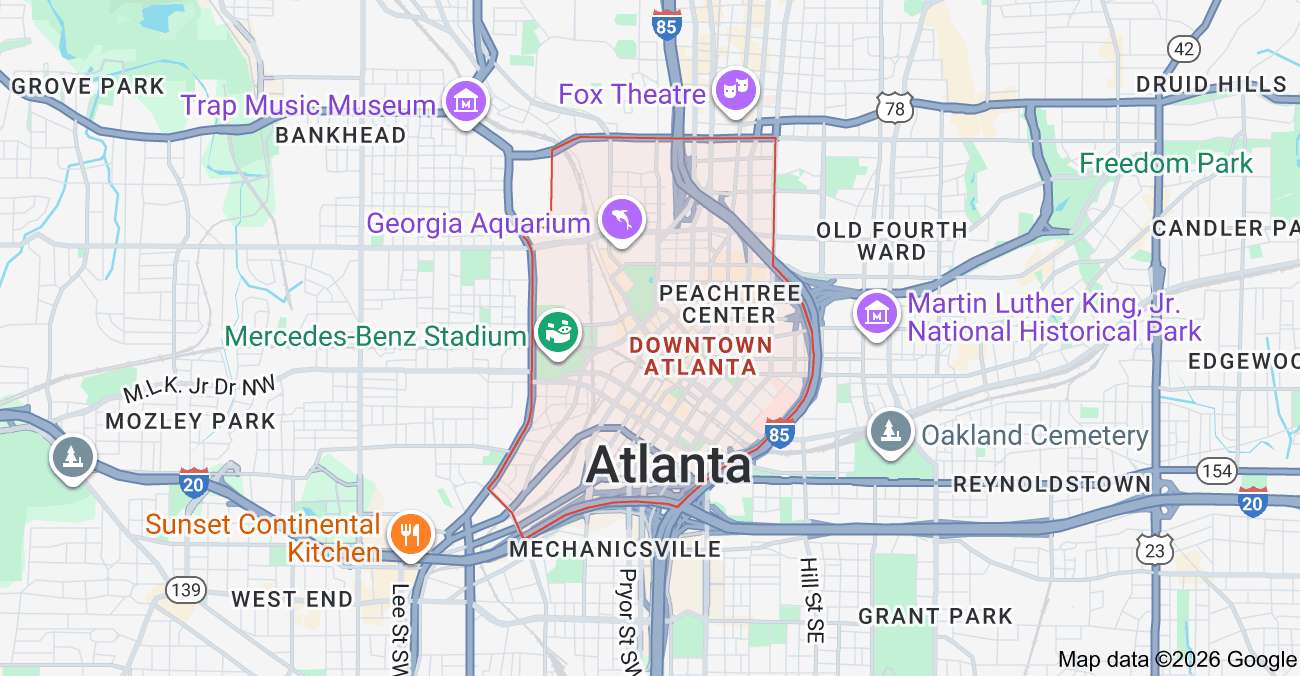
Where is Downtown Atlanta?
Downtown Atlanta is located at the center of the city, fully inside the I-285 perimeter. It serves as Atlanta’s primary business, government, and transit core.
Its central position places residents within immediate reach of surrounding neighborhoods and major employment hubs.
Central Atlanta core (ITP)
Immediate access to I-75/I-85 (Downtown Connector)
Adjacent to Midtown, Old Fourth Ward, and Castleberry Hill
Direct proximity to government, university, and medical institutions
Highly connected transit and infrastructure access

What Living in Downtown Feels Like
Downtown is intense, dense, and constantly in motion.
Sidewalks stay active throughout the day, and the neighborhood doesn’t “power down” after office hours.
The day-to-day rhythm is driven by transit hubs, government offices, universities, tourism, and residents sharing the same space.
Downtown feels functional and fast, with steady foot traffic, street noise, and infrastructure activity shaping daily life.
Noise Level
Noise levels are consistently high near main corridors, MARTA stations, and highway access points.Traffic, sirens, buses, and street activity create a louder baseline than most Atlanta neighborhoods — even outside of major events.
If you want quiet, Downtown will feel like a constant adjustment rather than a temporary spike.
Getting Around Day-to-Day
Most residents rely on walking, MARTA, short rideshares, or quick drives rather than long daily commutes. The street grid makes getting around straightforward, but movement is influenced by traffic patterns, one-way streets, and constant activity.
Parking is available but typically paid or structured, and convenience often comes with extra cost.
Lifestyle Tradeoffs
Downtown works best for renters who prioritize being in the center of the city — even when the environment feels loud and high-energy. You’re trading “calm neighborhood living” for access, connectivity, and a location that stays active day and night.
Commute & Transportation
TRANSIT & WALKABILITY
Multiple MARTA rail stations throughout Downtown
Extensive bus routes along major corridors
Walkable street grid with dense pedestrian access
Walkable access to offices, universities, government buildings, and daily errands
TYPICAL COMMUTES
Downtown employers: walkable or minimal travel
Midtown: short northbound commute
Buckhead: direct northbound access
OTP commutes: possible but slower during peak hours
DRIVING ACCESS
Immediate access to I-75/I-85 (Downtown Connector)
Easy north/south travel to Buckhead and Downtown
Faster cross-city access than most OTP neighborhoods
PARKING REALITY
Most apartments offer structured or garage parking
Guest parking is limited in many areas
Street parking varies significantly by block and time of day
Midtown | Downtown | Buckhead
Brookhaven | Decatur | Chamblee
Sandy Springs | Dunwoody
Roswell | Alpharetta
Vinnings | Smyrna | Marietta
East Point | College Park
Duluth | Lawrenceville | Peachtree Corners | Norcross

Planning is the first step.
Placement is the next.
ADH is built and operated by licensed local expertise — not automated listings or third-party feeds.
Move forward with an apartment placement handled by real local expertise.